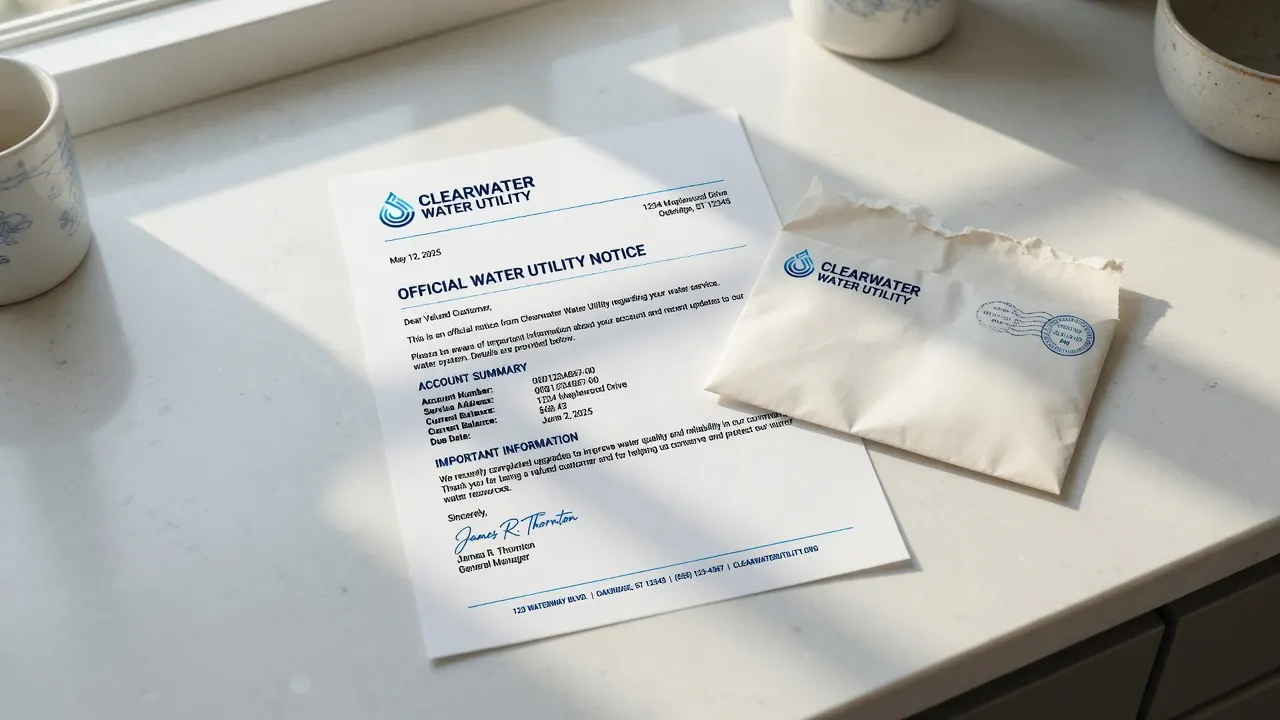
Since late 2024, community water systems have had to inventory service lines and notify customers in writing when a line is lead, galvanized requiring replacement, or simply unknown. The notices can repeat until the line is replaced or verified. Here is the translation.
"LEAD"
The utility's records or inspection say your service line is lead. Treat it as confirmed. Do: get on the utility's replacement list now (queues grow every year), ask about cost-share for the private side, use cold water for drinking and cooking, and put an NSF/ANSI 53 filter on the tap you drink from until the dig happens.
"GALVANIZED REQUIRING REPLACEMENT"
Your line is galvanized steel that is, or ever was, downstream of lead. Galvanized pipe is a sponge for lead particles: it stores them and releases them unpredictably, which is why the rule treats it like lead. Do: the same as for lead — list, cost-share, filter.
"UNKNOWN" / "NOT VERIFIED"
The most common letter, and the most misread. It does not mean you are safe — it means the utility has no record either way. Homes built before 1986 should assume risk until verified. Do: run the two-minute pipe test, send the utility a photo if they ask (many verify lines this way), and ask whether they offer water testing or certified-lab instructions.
No letter at all?
Either your line is documented non-lead — or the letter went to the property owner instead of you. Renters: ask your landlord or look up your address in the utility's online service-line map; most big utilities now publish one.