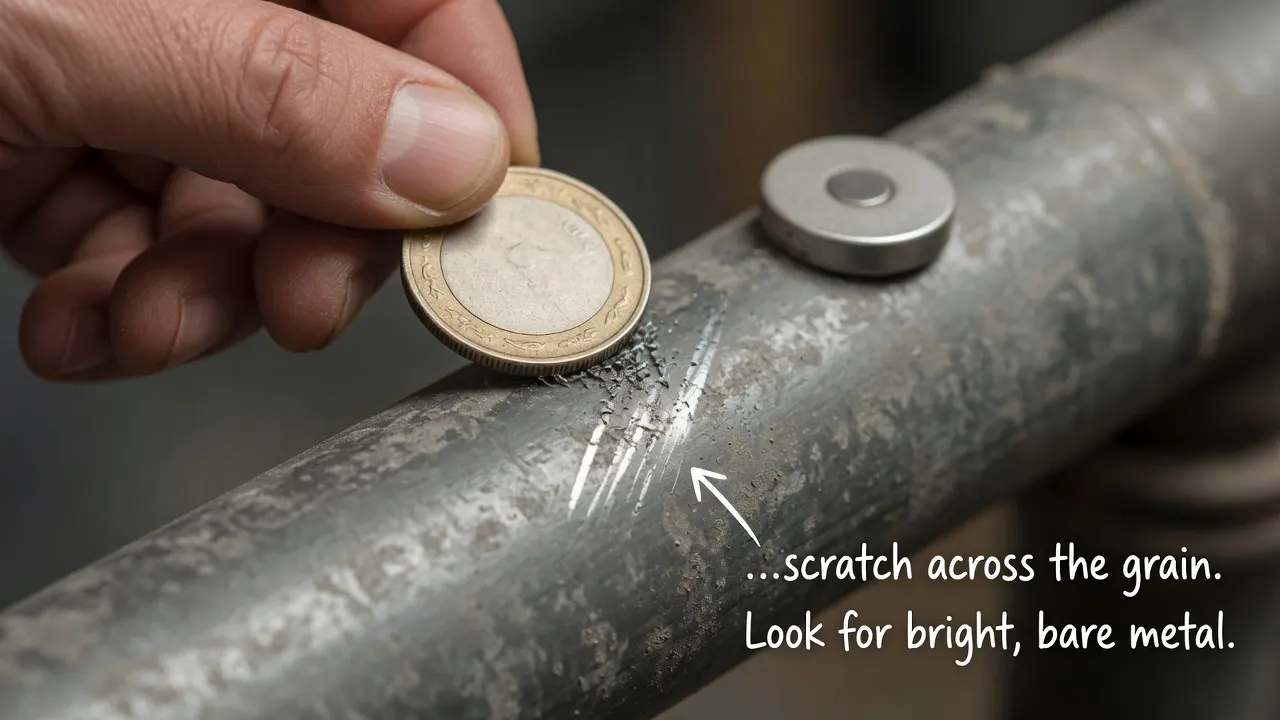
Find where the water service enters your home — usually in the basement or crawl space, on the street-facing wall, just before the shut-off valve and the water meter. The short stretch of pipe coming out of the floor or wall is the one to test.
The test
- Scratch it with a coin or a key, across the grain. You are looking at the colour of the bare metal under any paint or oxidation.
- Hold a magnet to it. Any fridge magnet works.
Reading the result
- Lead: soft, dull grey pipe; the scratch turns bright, shiny silver; the magnet does not stick. Lead pipes often have a swollen "wiped" joint near the shut-off valve.
- Galvanized steel: grey, hard, the scratch stays dull — and the magnet sticks. Galvanized matters too: if it ever sat downstream of lead, it can store and release lead particles.
- Copper: the scratch shows the colour of a penny. Non-magnetic.
- Plastic (PEX/PVC): white, blue, or black; not metal at all. No lead risk from the line itself.
What this test cannot tell you
You are seeing only the last metre of the line. The buried section between the street and your wall can still be lead even if the visible stub is copper — partial replacements were common for decades. Two things confirm the full pipe-material picture: your utility's service-line inventory (they are required to publish one — decode the notice they sent you), an inspection, or a licensed plumber. A certified water test, which some utilities or states provide, tells you whether lead is present in the water you drink.